AC Making Noise? Same Day Service in Katy, TX | Katy 24 Hour AC Repair
Strange AC noises in Katy, TX explained what rattling, squealing, banging, and hissing each actually mean. Call (346) 480-4090.
AC Making Noise — Rattling, Squealing, or Banging in Katy, TX
Different AC noises point to different, fairly specific causes, and the type of sound is often more diagnostically useful than how loud it is. Below is what each common noise type usually means, so you can describe it accurately when you call and have a better sense of urgency before a technician arrives.
Rattling
Usually, loose hardware is a panel screw that’s worked loose, debris (a stick, acorns, or landscaping material) that’s fallen into the outdoor unit, or a loose fan blade. Generally not an emergency, but worth addressing before the loose component causes secondary damage by contacting a moving part.
Squealing or Screeching
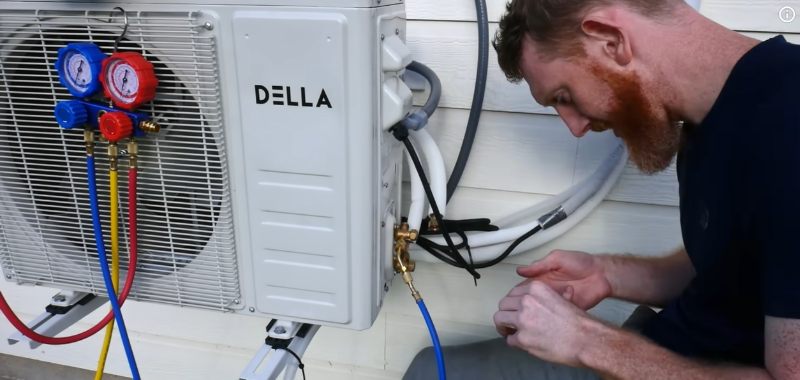
Most often, a fan motor bearing wears out, or on older belt-driven blower systems, a belt that’s slipping or cracking. This tends to worsen quickly once it starts, and a squealing motor bearing can seize completely without warning, so this is worth scheduling promptly rather than waiting for it to become a full shutdown.
Banging or Clanking
One of the more serious noise categories often a loose or broken component inside the compressor itself, or a blower wheel that’s come loose on its shaft and is striking the housing. Banging from the outdoor unit specifically warrants turning the system off and calling rather than continuing to run it, since a compressor-related bang can indicate advancing internal damage.
Hissing or Bubbling
Points to refrigerant escaping under pressure a hissing sound near the indoor coil or refrigerant lines is one of the more direct audible signs of a leak. A bubbling sound near the outdoor unit can also indicate refrigerant moving through a compromised line. Either warrants a refrigerant pressure check.
Clicking (Repeated, Not Just at Startup)
Distinct from the single startup click discussed elsewhere a repeated clicking during normal operation can point to a failing relay or a control board issue causing the system to attempt to cycle abnormally.
Humming With No Airflow
Usually an electrical component most often a capacitor providing enough power to create a hum but not enough to actually start the compressor or fan motor turning. This overlaps with the “clicking but not starting” symptom and typically has the same root cause.
Which Noises Are Safe to Wait On, and Which Aren’t
Rattling from loose debris is usually safe to schedule as a standard appointment. Squealing, banging, and hissing all warrant faster attention squealing and banging because the underlying components can fail completely and suddenly, and hissing because a refrigerant leak actively worsens the longer the system runs on a depleted charge.
Approximate Repair Cost by Noise Type
Rattling from loose debris or hardware is often a low-cost fix, sometimes resolved during the diagnostic visit itself. Squealing from a fan motor bearing typically runs $200 to $500 for motor replacement. Banging tied to a compressor issue can range widely, from a few hundred dollars for a loose internal component to well over $1,000 if compressor damage has already occurred. Hissing from a refrigerant leak generally runs $200 to $600 for leak repair and recharge, depending on the leak’s location.
Why Describing the Noise Accurately Helps
Because noise type maps fairly reliably to cause, giving an accurate description when you call rattling versus squealing versus banging versus hissing genuinely changes what parts a technician brings on the first visit. If you’re unsure which category your system’s sound falls into, a short phone video of the sound is often more useful than a verbal description alone.
Frequently Asked Questions
A Simple Way to Track a Noise Before We Arrive
If the noise is intermittent rather than constant, noting when it happens only on startup, only during peak afternoon heat, only after the system has run for a while gives useful diagnostic context. A noise only on startup points more toward electrical components; a noise that develops after extended running points more toward a part overheating or wearing under sustained load, like a motor bearing.
Noise Complaints We Get Most Often by Season
Squealing and humming-with-no-start complaints cluster heavily in the first sustained heatwave of early summer, when components that survived a mild spring finally get pushed hard enough to reveal weakness. Banging and hissing tend to spread more evenly across the peak summer months as systems accumulate run-hours. Rattling has no strong seasonal pattern, since it’s usually tied to debris or loose hardware rather than heat-driven wear.