AC Blowing Warm Air in Katy, TX | Causes & Same-Day Fix | Katy 24 Hour AC Repair
AC running but blowing warm air in your Katy, TX home? Here’s what actually causes it and how fast it can be fixed. Call (346) 480-4090 for same-day service.
AC Blowing Warm Air in Katy, TX
Warm air from vents while the system is running points to one of three general categories: the compressor isn’t cooling refrigerant properly, refrigerant has leaked out, or, less commonly, the system’s mode or wiring is wrong. This is one of the more urgent symptoms in Katy’s climate specifically, because a system that’s running constantly without cooling is both wasting energy and giving the household no relief from heat that can reach dangerous indoor levels within hours.
Common Causes of Warm Air From a Running System
- With a low or depleted refrigerant charge, the system can’t absorb heat from indoor air without adequate refrigerant flow
- A failed or failing compressor is the component that pressurizes refrigerant to enable the cooling cycle; without it working, the system moves air but doesn’t cool it
- Frozen evaporator coil ice blocks proper heat exchange, even though the blower is still pushing air across it
- Dirty condenser coil: the outdoor unit can’t reject heat properly if it’s caked in dirt, pollen, or grass clippings, which backs pressure up through the whole system
- Reversing valve stuck in heating position relevant only on heat pump systems, where a stuck valve can cause the system to run in the wrong mode
- Thermostat set incorrectly, or a wiring fault is sending the wrong signal to the outdoor unit
The ‘No Pumper’ Compressor — An Often-Missed Cause
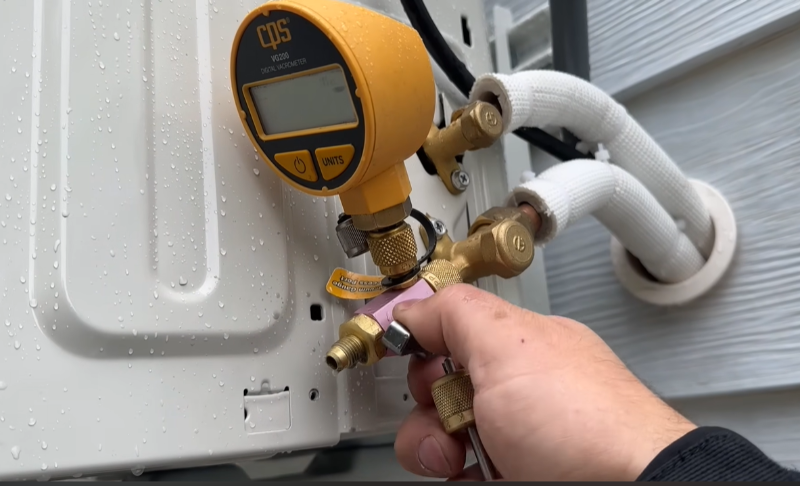
Occasionally, a compressor draws normal electrical current and audibly runs, yet the system still blows warm air with equal pressure readings on the high and low refrigerant sides. This is what technicians call a “no pumper.” The compressor motor runs, but it’s lost the mechanical ability to actually pump refrigerant vapor. It’s easy to misdiagnose as “the compressor sounds fine, so it must be something else,” which is why amp-draw and pressure testing together matter more than listening alone.
First Steps Before You Call
Check that the outdoor condenser unit isn’t visibly blocked by plants, debris, or a fence panel restricting airflow. A partially obstructed condenser is a genuinely common and easily corrected cause. If the filter is visibly dirty, replace it. Beyond that, refrigerant handling and compressor diagnosis require licensed, EPA-certified technicians; this isn’t a category where DIY troubleshooting gets much further than the basic checks above.
Why Katy Homes See This Symptom Often in Peak Summer
Sustained high outdoor temperatures push condensers to reject heat against a bigger temperature differential, which stresses aging compressors and exposes existing slow refrigerant leaks exactly when the system is working hardest. Homes in Cross Creek Ranch with larger, open floor plans and heavier west-facing window exposure tend to push systems closer to their limits on the hottest afternoons, which is when marginal compressors or low refrigerant charges finally show themselves as warm air instead of cool.
Repair Cost for This Issue
A dirty condenser coil cleaning is one of the least expensive fixes, often under $150. Refrigerant leak repair with recharge typically runs $200 to $600. Compressor replacement is the most expensive outcome, ranging from roughly $1,200 to $2,500 depending on the unit, which is why confirming a genuine compressor failure rather than assuming it through amp-draw and pressure testing matters before committing to that level of repair.
How This Differs From a System That Won’t Cool at All
Warm air from a running system is a different diagnostic path than a system that’s simply weak or slow to cool. A system blowing genuinely warm (not just less-cold) air points more specifically toward a compressor or refrigerant problem, while sluggish, only-somewhat-cool air more often points toward airflow restriction. Describing which one you’re experiencing when you call helps narrow the likely cause before a technician even arrives.
Frequently Asked Questions
Preventing Warm-Air Failures
Keeping the outdoor condenser clear of grass clippings, leaves, and overgrown landscaping with at least two feet of clearance on all sides prevents one of the more avoidable causes of this symptom. Beyond that, a spring refrigerant check catches a slow leak before it depletes enough charge to stop cooling entirely, which is the difference between a routine top-off and an emergency call in July.
A Note on DIY Refrigerant Top-Off Kits
Retail refrigerant top-off kits sold for DIY use are worth avoiding. Adding refrigerant without first confirming the system’s actual charge against manufacturer specification can overcharge a system, which causes its own set of problems distinct from being low, and handling refrigerant without EPA Section 608 certification is a regulatory violation regardless of intent. A proper recharge always starts with evacuating and correctly weighing in charge to spec, not simply adding until a gauge reads “better.”